

Blog
Contact Lenses in Bangladesh: A Complete Beginner’s Guide to Power, Types and Comfort

If you are new to contact lenses, the choices can feel overwhelming. Power, types, colours, comfort, hygiene- where do you even start? The good news is that lenses are simple once you understand the basics. This complete guide explains everything a first-time buyer in Bangladesh needs to know, so you can choose the right Contact Lens with confidence and wear it safely. Mehboob Optics has guided lens wearers in Dhaka since 1948, with safe, practical advice based on real experience.
Are contact lenses right for you?
Contact lenses suit most people who want clear vision without glasses, or who simply want to change their eye colour. They are great for sports, events, travel and anyone who finds glasses inconvenient. They also give a wider field of view than glasses and never fog up or slip down your nose.
That said, lenses need a little care and clean habits. If you have very dry eyes or certain eye conditions, an optician can advise whether lenses suit you and which type is best. For most beginners, modern soft lenses are comfortable and easy once you get used to them. A quick eye check before you start makes the whole experience smoother and safer.
Understanding lens power
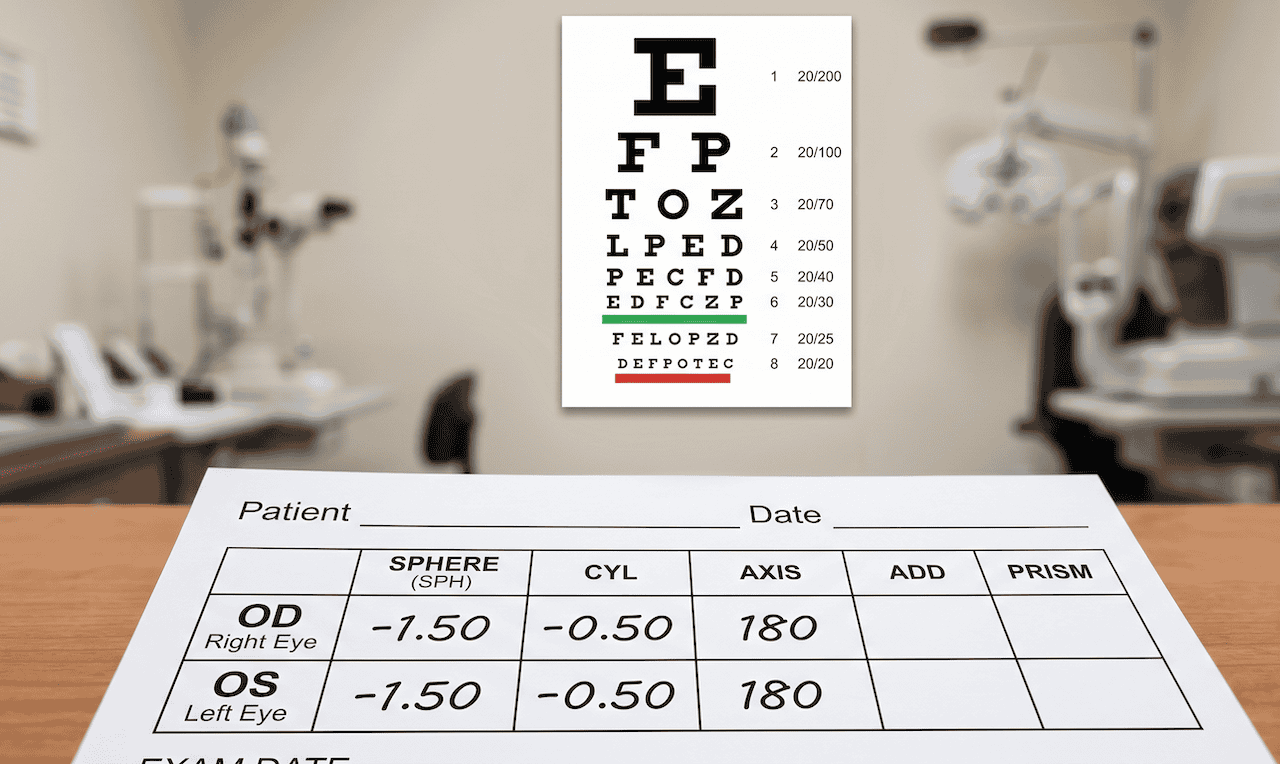
If you wear glasses for clear vision, you will need lenses with matching correction, called power. A Powered Lens, also known as a prescription lens, is made to your eyesight so you can see clearly without glasses. Power is written as a number with a plus or minus sign, such as -1.50 for short-sight or +1.00 for long-sight.
Your contact lens power can be slightly different from your glasses power, because lenses sit directly on the eye. That is why it is best to get checked by an optician before buying, rather than copying your glasses prescription exactly. If your eyesight is fine and you only want to change your colour, you can choose a plain, zero-power lens instead.
Daily, monthly or yearly: which type to choose
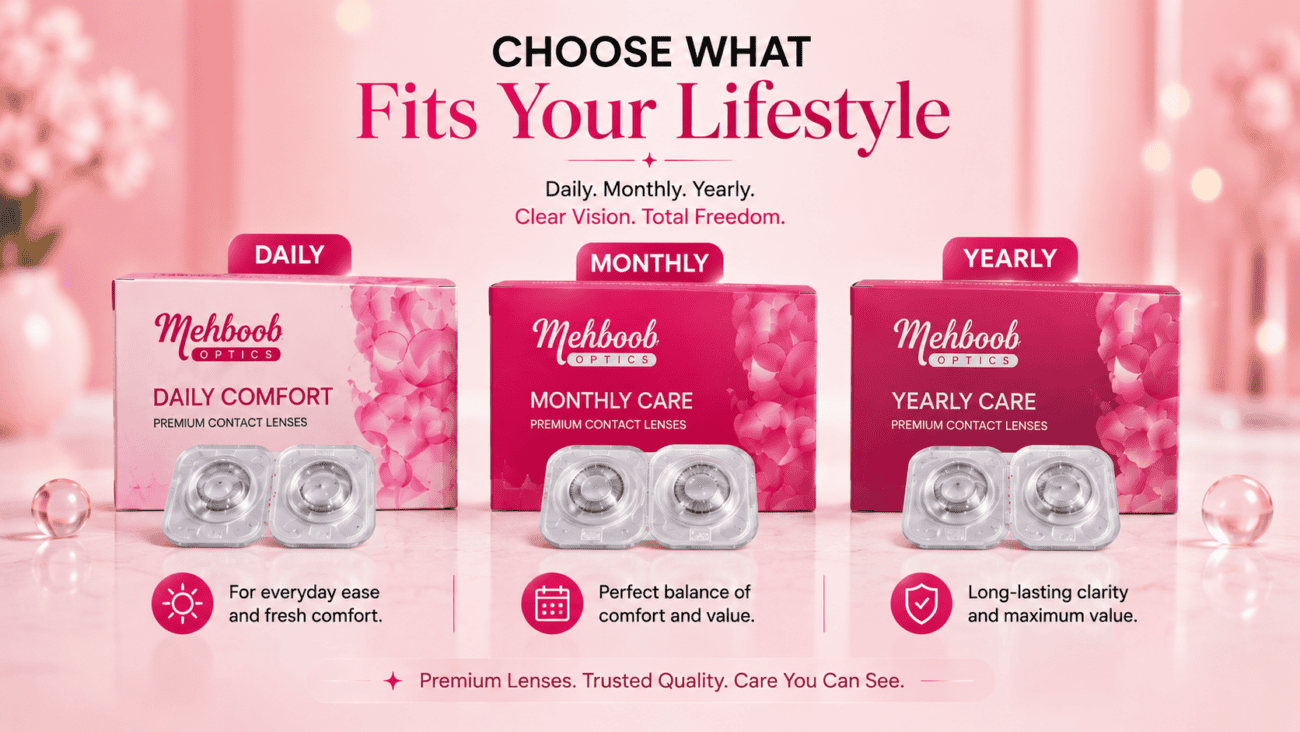
Contact lenses come in different wear cycles, and each suits a different routine. Daily lenses are worn once and thrown away at night, so they are the most hygienic and the easiest for beginners, with no cleaning needed. Monthly lenses are reused for about a month with proper cleaning and storage, offering good value for regular wearers.
Yearly lenses last the longest with careful daily care, which makes them economical for coloured lenses worn now and then. For example, if you wear lenses only for events, dailies or yearly coloured lenses make sense; if you wear them most days, monthly lenses balance cost and convenience. Start with the type that matches how often you plan to wear them.
Soft lens materials and comfort
Most beginners start with soft lenses, which are thin, flexible and comfortable from day one. They come in materials with different water content and breathability. Higher water content can feel fresh but may dry faster in air-conditioned rooms, while silicone hydrogel materials let more oxygen reach the eye for longer, healthier wear.
Two numbers matter for fit: the base curve, which is how curved the lens is, and the diameter, which is how wide it is. A lens that fits your eye well feels comfortable and stays in place. An optician measures these for you, which is why a first fitting is so helpful. The right material and fit make all the difference between lenses you tolerate and lenses you forget you are wearing.
Coloured and powered coloured lenses
Many people in Bangladesh wear lenses for style as well as sight. A Coloured Contact Lens can give you a natural brown, honey or hazel look, or a bold grey or blue for events. Trusted brands like Bella Contact Lens offer soft, comfortable shades that look natural on dark eyes.
The best part is that colour and power can come together. A powered coloured lens lets you see clearly and change your eye colour at the same time, so you get both benefits in one lens. If you are new to colour, start with a natural shade close to your own eyes, then try bolder colours once you are comfortable inserting and removing lenses.
How to put in and take out lenses
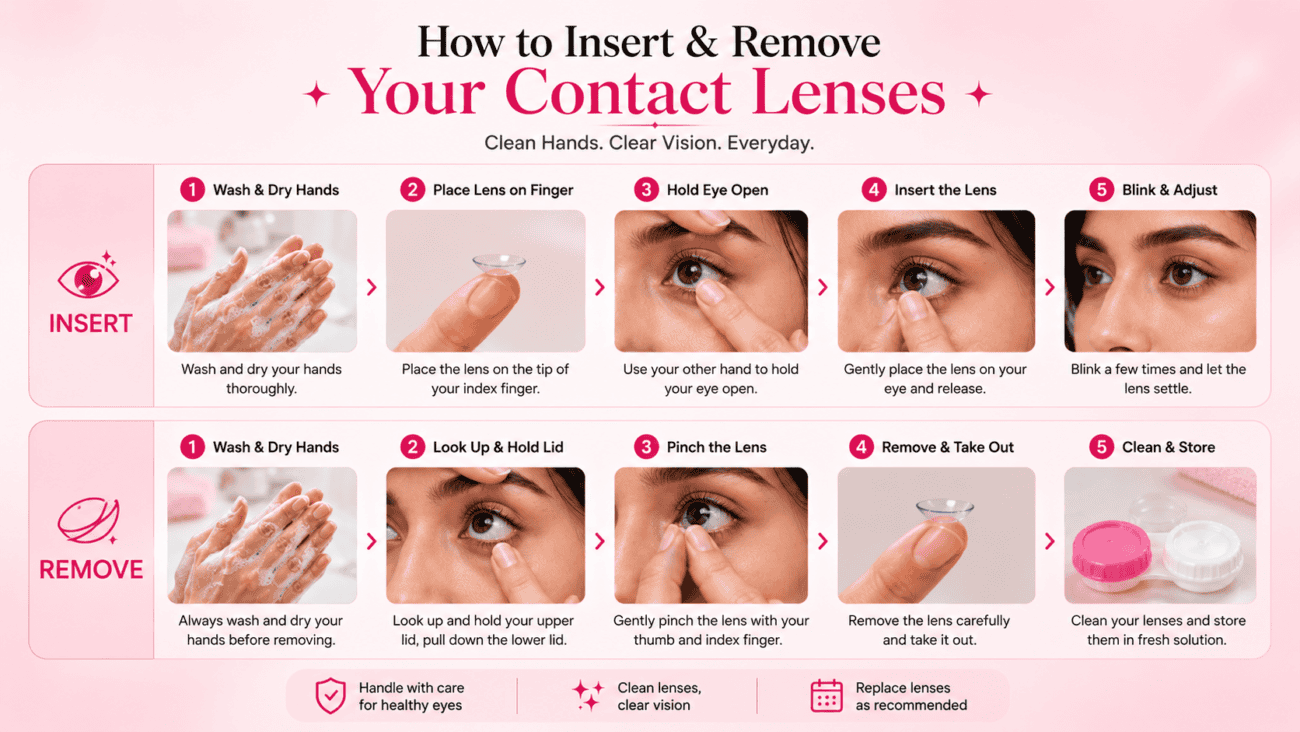
Putting in lenses feels tricky at first but quickly becomes easy. Wash and dry your hands. Place the lens on your fingertip and check it is the right way out, like a bowl, not a saucer with flared edges. Hold your upper and lower eyelids open, look up or to the side, and gently place the lens on your eye. Blink slowly and it settles into place.
To remove a lens, wash your hands again, look up, pull down your lower eyelid, and gently pinch the lens out with clean fingertips. Always start with the same eye each time so you do not mix up left and right powers. Take your time; within a few days the whole routine takes less than a minute.
Cleaning, storage and solution
For monthly and yearly lenses, cleaning is essential. Always use fresh multipurpose solution, never water or saliva, which can carry germs. After removing a lens, rub it gently in solution, rinse it, and store it in a clean case filled with fresh solution. Never top up old solution; empty and refill the case each time.
Replace your lens case every one to three months, and let it air-dry between uses. Keep solution bottles closed and within their expiry date. These habits prevent infections and keep your lenses clear and comfortable. Daily lenses skip all of this, which is one reason they are so easy for beginners and busy people.
Avoiding dry eyes, burning and irritation
Comfort comes down to good habits and good lenses. Dryness and burning often come from long wear, low-quality lenses, or dirty hands. Wash your hands every time, follow the wear-time limit, and never sleep in lenses unless they are designed for it. Air-conditioning and long screen time can dry your eyes, so blink often and use lubricating drops made for lenses if needed.
If your eyes feel dry, red or start to burn, remove the lens and let your eyes rest, then switch to glasses for the day. Choosing soft, moisture-rich lenses and not over-wearing them prevents most problems. If irritation continues, see an optician, as it may be a fit or material issue that is easy to fix.
First-time buying tips and getting checked
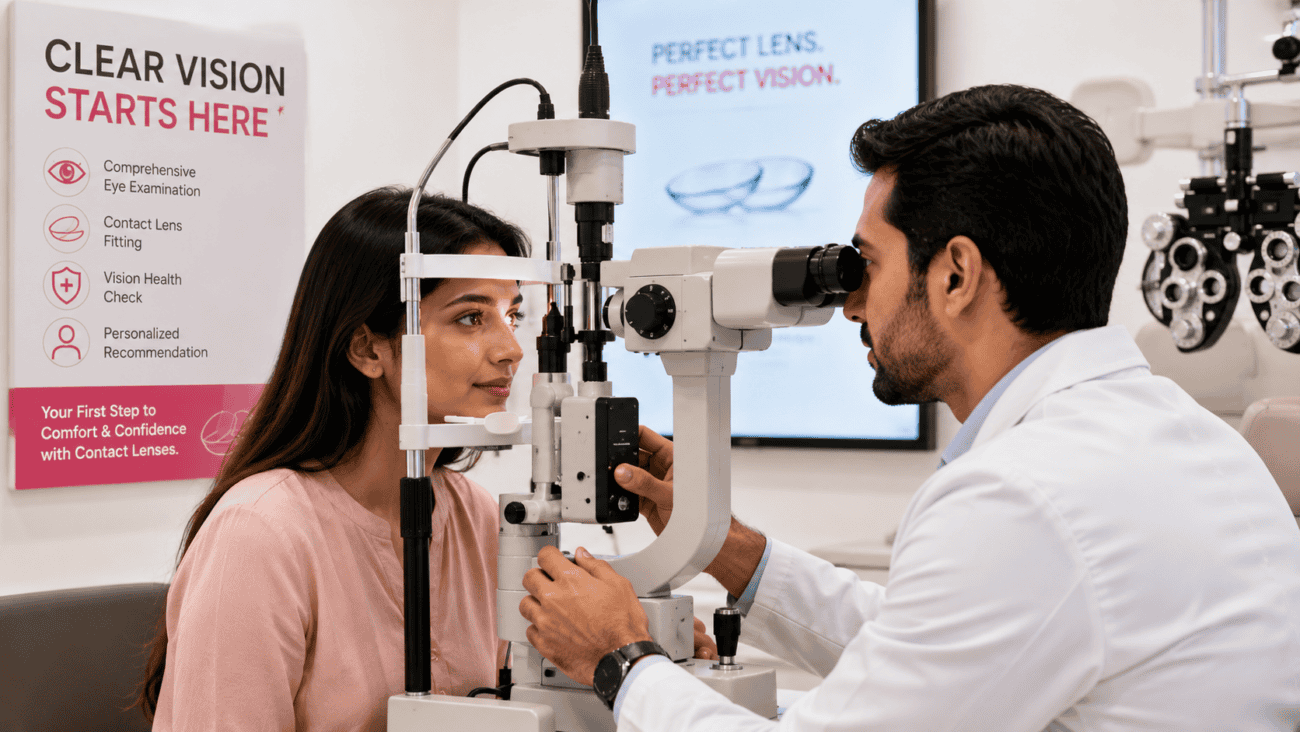
Before your first pair, get your eyes checked so you know your correct power, base curve and diameter. This single step prevents most beginner problems. Start with daily lenses while you learn to insert and remove them, since there is no cleaning to worry about and a fresh lens every day is very safe.
Buy only genuine lenses from a trusted seller to protect your eyes, and check the packaging and expiry date. Keep a pair of glasses as backup for tired days. With the right start and a little practice, contact lenses are easy, safe and comfortable. Explore the Contact Lens range, see Powered Lens options for clear vision, or browse Coloured Contact Lens shades for a new look.
Common contact lens myths, busted
A few myths scare beginners away from lenses for no reason. One common fear is that a lens can slip behind your eye and get lost. This is impossible; a thin membrane covers your eye and stops anything going behind it. Another myth is that lenses are painful, when modern soft lenses are designed to feel comfortable within minutes.
Some people believe lenses are only for adults, but teens can wear them safely with guidance and clean habits. Others think coloured lenses damage the eyes, when genuine branded lenses worn correctly are perfectly safe. The real keys are simple: buy genuine lenses, keep them clean, follow the wear-time, and get checked first. With the facts clear, you can start your Contact Lens journey with confidence.
Frequently Asked Questions
Is contact lens power the same as glasses power?
Often it is close, but not always the same, because lenses sit on the eye. Get checked by an optician before buying a Powered Lens.
Which contact lens type is best for beginners?
Daily lenses are best for beginners because they are hygienic, need no cleaning and are easy to use.
Can I get coloured lenses with power?
Yes. A powered Coloured Contact Lens gives you clear vision and a new eye colour in one lens.
How do I stop my eyes burning with lenses?
Use fresh solution, wash your hands, follow the wear-time limit, and choose soft, moisture-rich lenses. Remove them if your eyes feel dry.
How long do contact lenses last?
It depends on the type: daily lenses last one day, monthly lenses about a month with care, and yearly lenses up to a year with proper cleaning.
Ready to start? Explore the full Contact Lens range, see Powered Lens options for clear vision, or browse Bella Contact Lens shades for a new look.


